n.21 When playing turns serious

Do you know this feeling of "no longer seeing the forest for the trees"? An all-consuming state of bewilderment?
Possibly "yes", and maybe at this point of not-knowing-how-to-go-on you went to someone, hoping he or she would know the way.
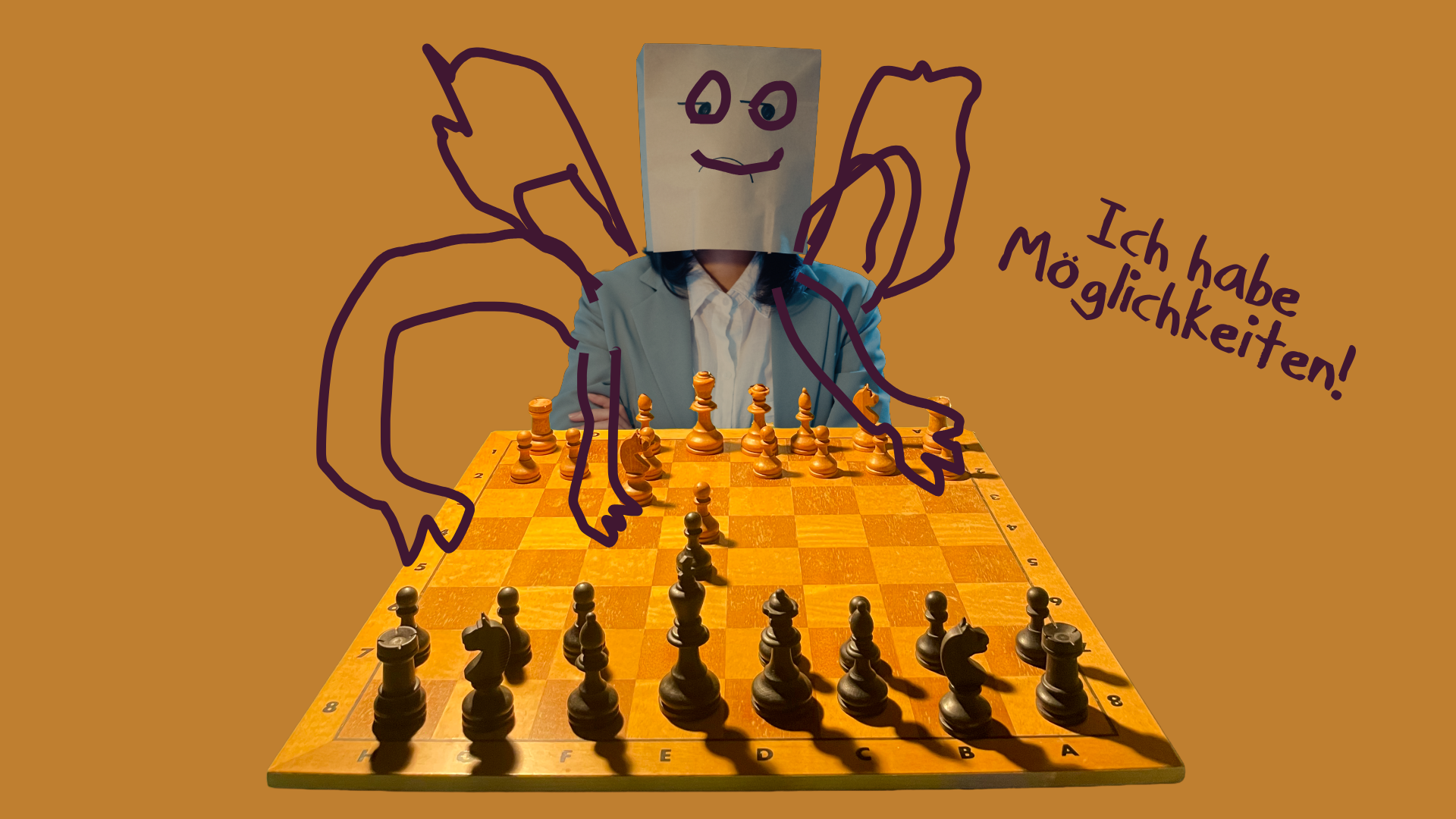
From the perspective of the one being approached, that tends to look like this:
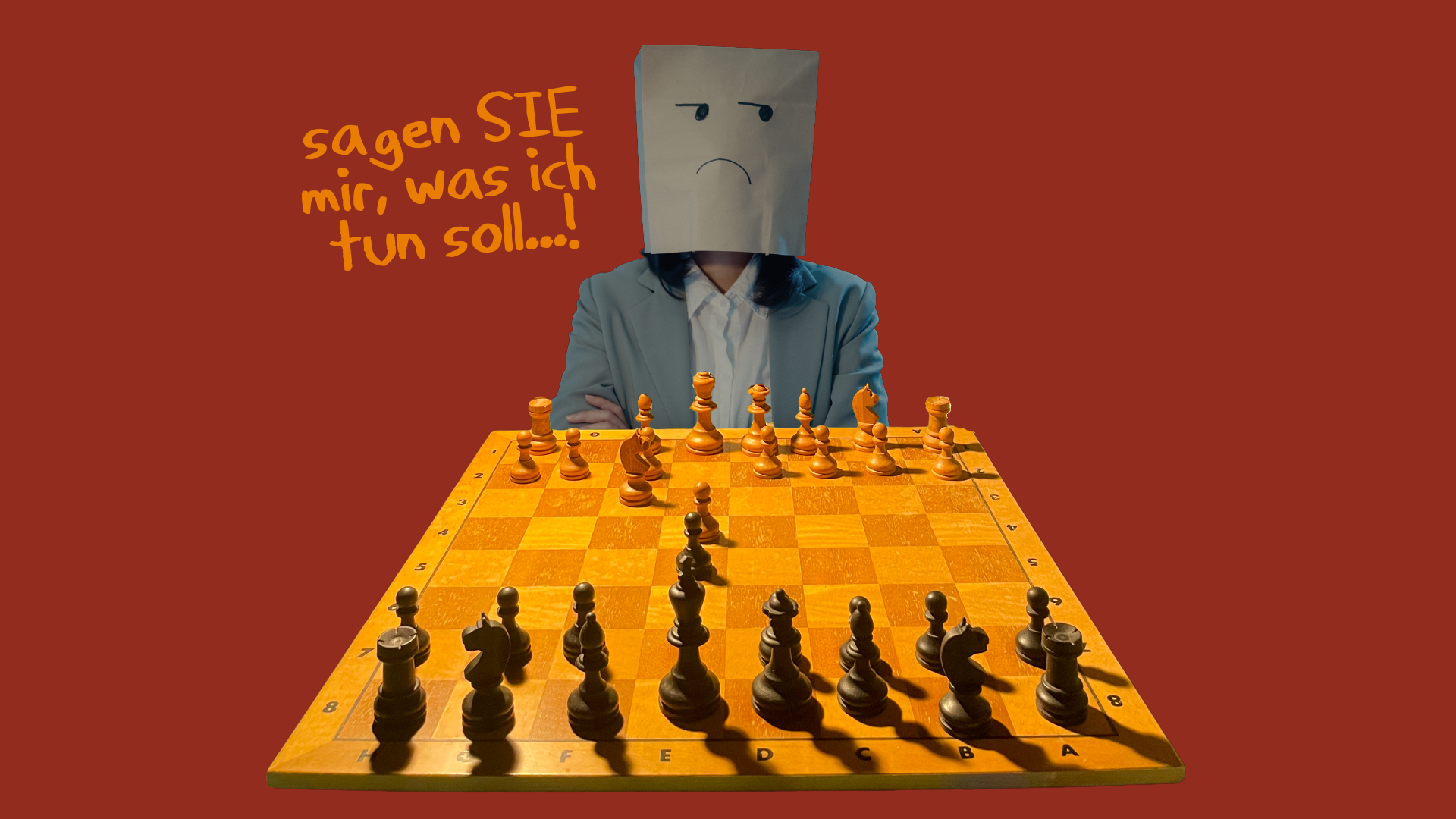
A person who has succumbed to the conviction that it is never their move; pushed back and panting after. De Shazer called such an attitude "complainant dynamics": a behavior based on the supposedly only solution to the problem lying outside one's personal sphere of influence.
A central idea of psychotherapy would be to let the impression sprout in the client that he or she holds a number of interesting moves, dares to play them actively and to flexibly follow their golden trail over the course of the game.
The therapist is in this sense something like a designer of a training camp, and the client is the player who successively (re)discovers their very personal style of play.
But how does a complainer become an exulter again?
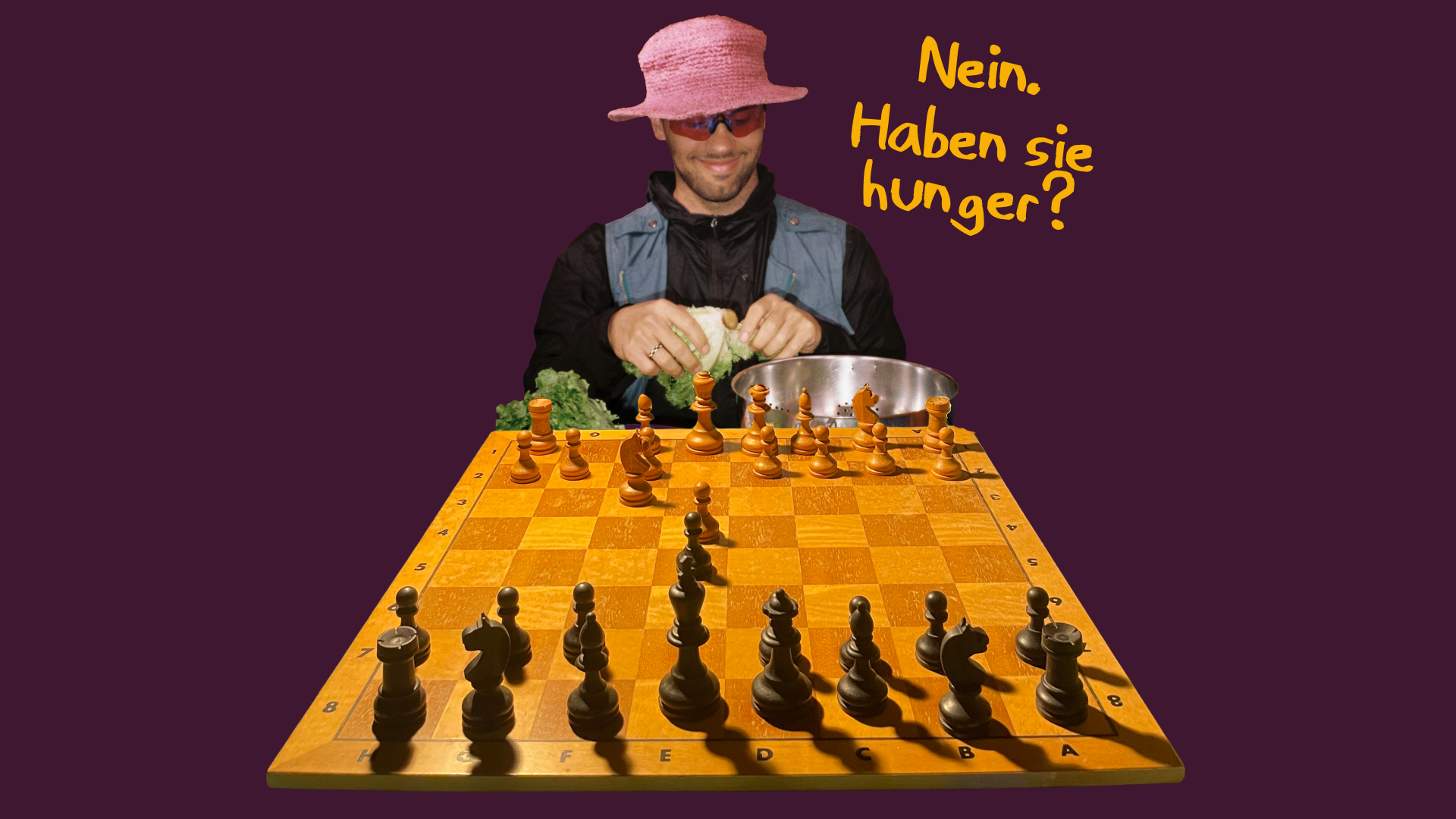
Gunther Schmidt coined the term "reality waiter" as a description for systemic therapy. This pinch of irritation and change of perspective goes excellently with the transition from a feeling of "I MUST" to an "I WANT". Welcome the change from therapeutic work to a state of therapeutic play, because fundamentally our brain is waiting for exactly that:
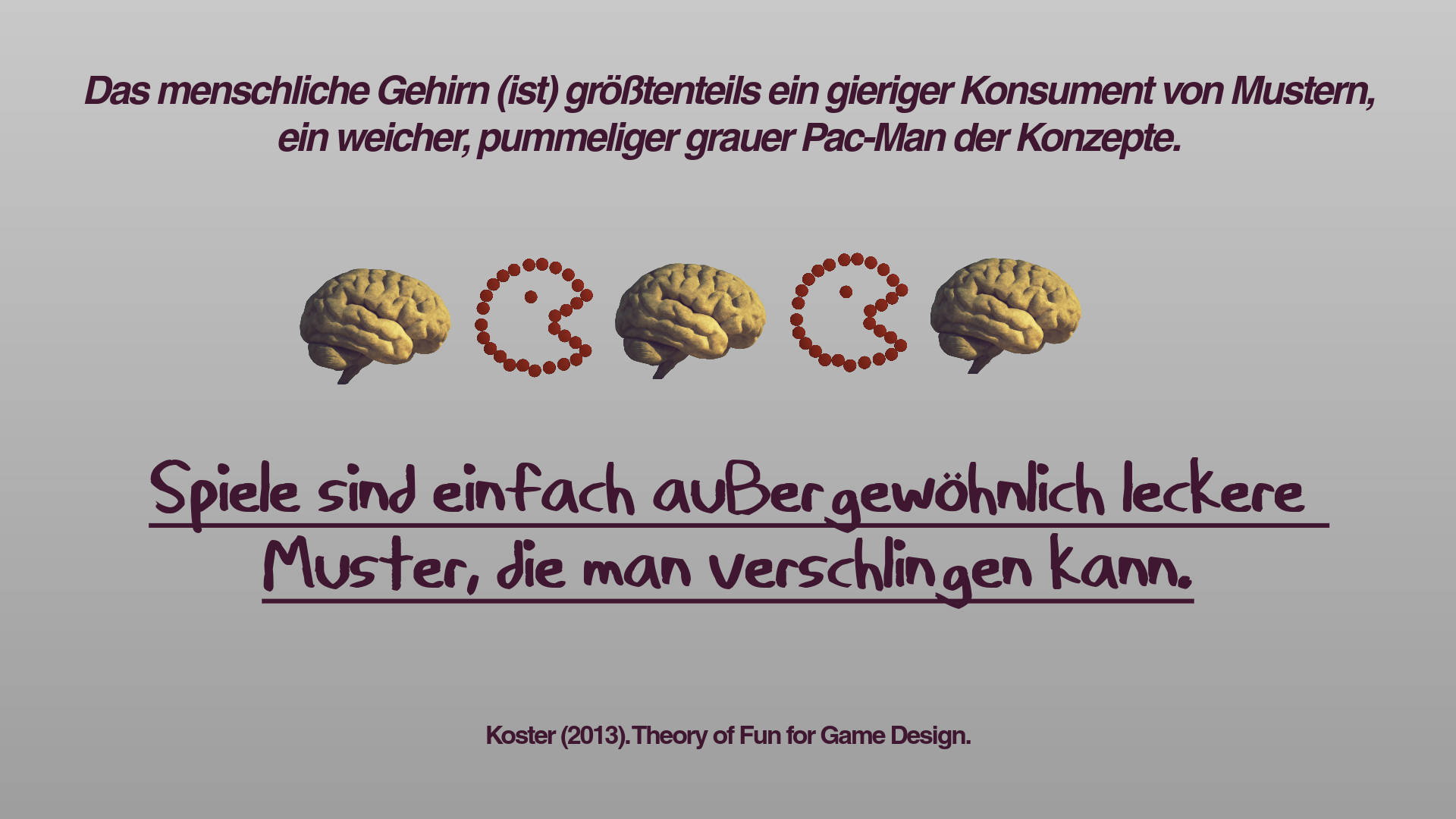
Games are something like "portals of possible experiences"; they do not force any particular behavior, but they make certain thinking/feeling/body experiences more likely.
A striking example is the game e-mission, which was awarded Kennerspiel des Jahres in 2024. In it, the players learn to solve complex climate problems together; in a famously entertaining way that stands diametrically opposed to the often paralyzing effects of global world crisis.
A game that would be therapeutically effective would possibly be one that makes diversity of options possible again:
The broaden-and-build theory (Fredrickson) is a bit like a swing. First it gets pushed by positive emotions (interest, love, joy, ...). Through that comes an expanded access to thoughts and options for action. By seizing these possibilities, physical, mental & social resources would build up steadily. An ever higher swinging would arise in the sense of a growth process, which in turn promotes the experience of positive emotions and thereby reinforces itself.
Thus, entering playful spaces of experience within therapeutic processes kills several birds with one stone. On the one hand they often pave positive-emotional states, and on the other they solve a basic problem of therapy:
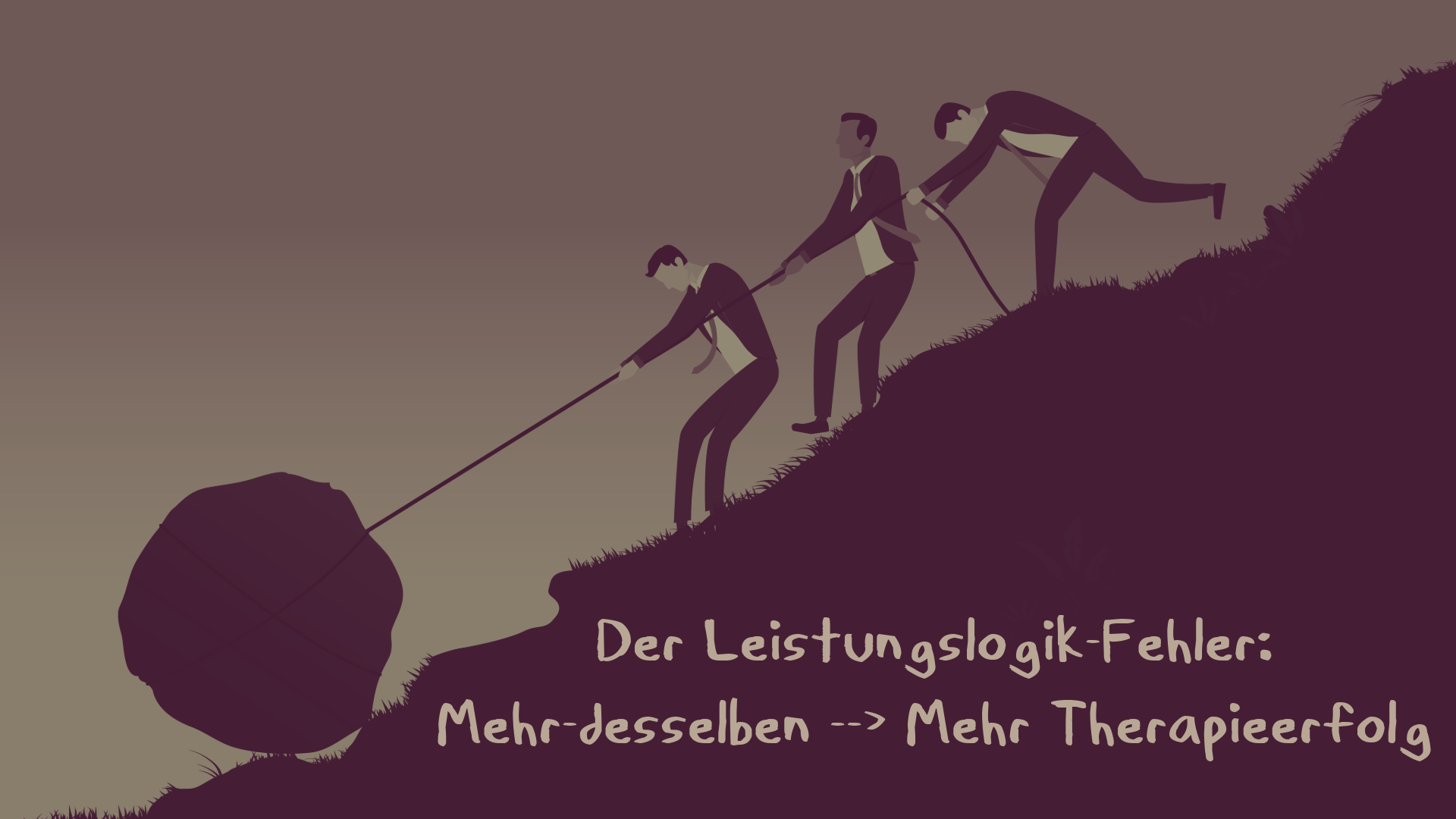
They counteract the central maxims of Western performance societies and thereby initiate an immediate change of logic; instead of "blasting through" a therapy with an unchanged high, (problem-maintaining) performance claim, playing experiences work through at least three core characteristics:
- Pattern interruption & irritation
- Self-purpose instead of result orientation
- Mistake-friendly space for experimentation
In this way, games, as particularly tasty patterns, have the potential to meet a person who came to therapy because he or she no longer even knows what enjoyment of taste means at all.
But which game tastes right to which person?
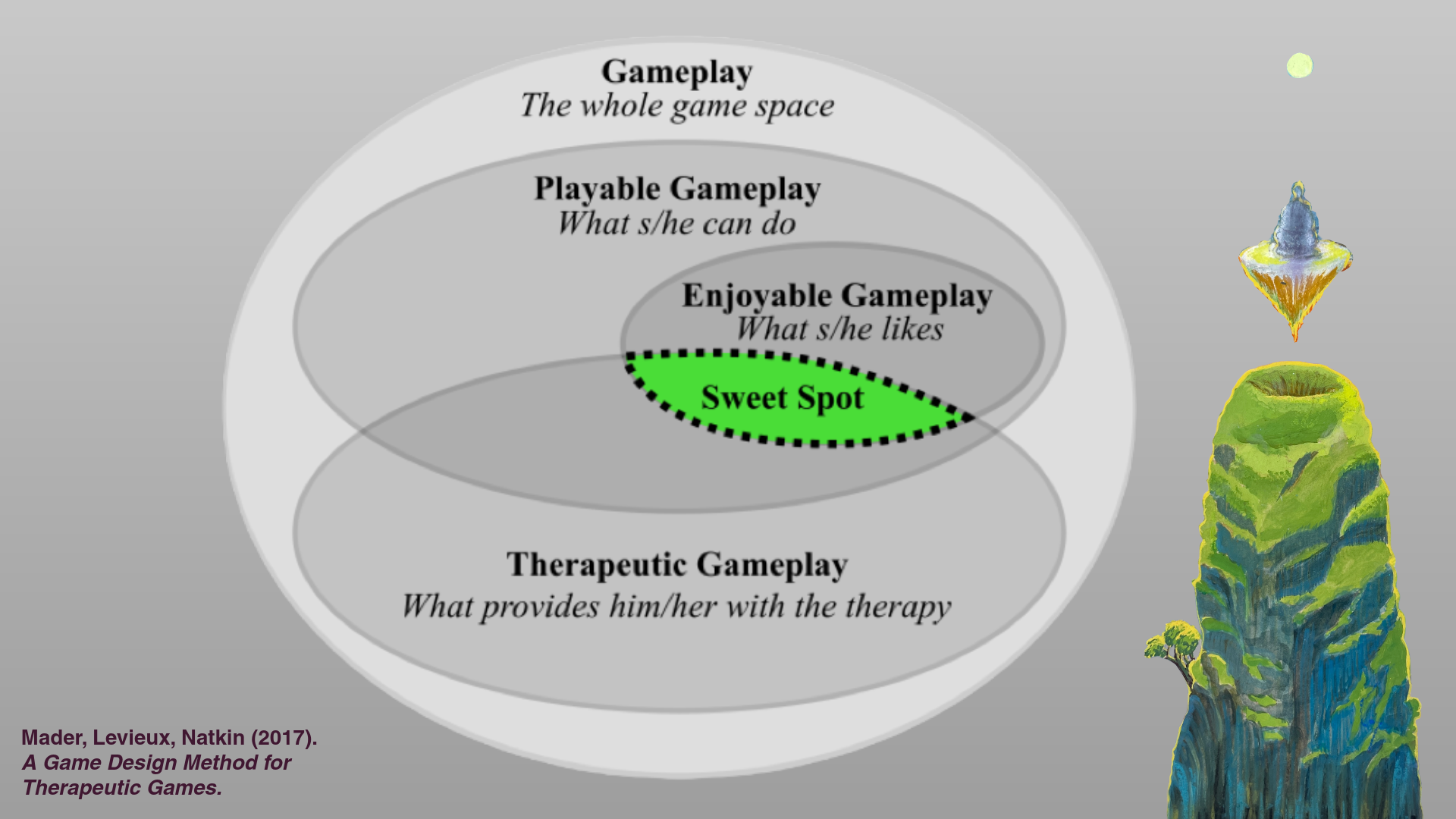
Mader, Levieux and Natkin (2017) asked themselves this question and thereby began to examine the design process of therapeutic games.
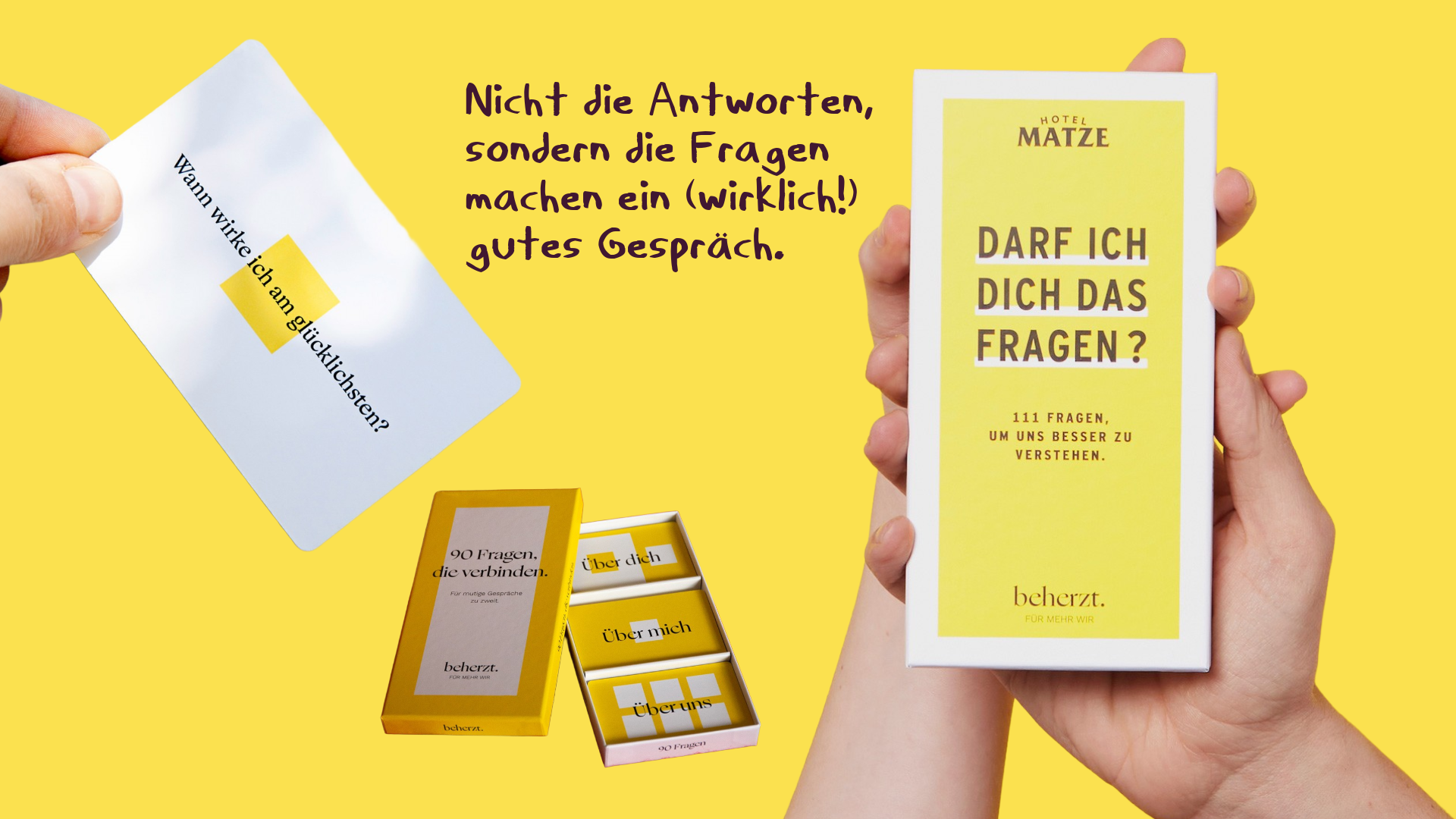
Question games are possibly the simplest form of profound playing moments.
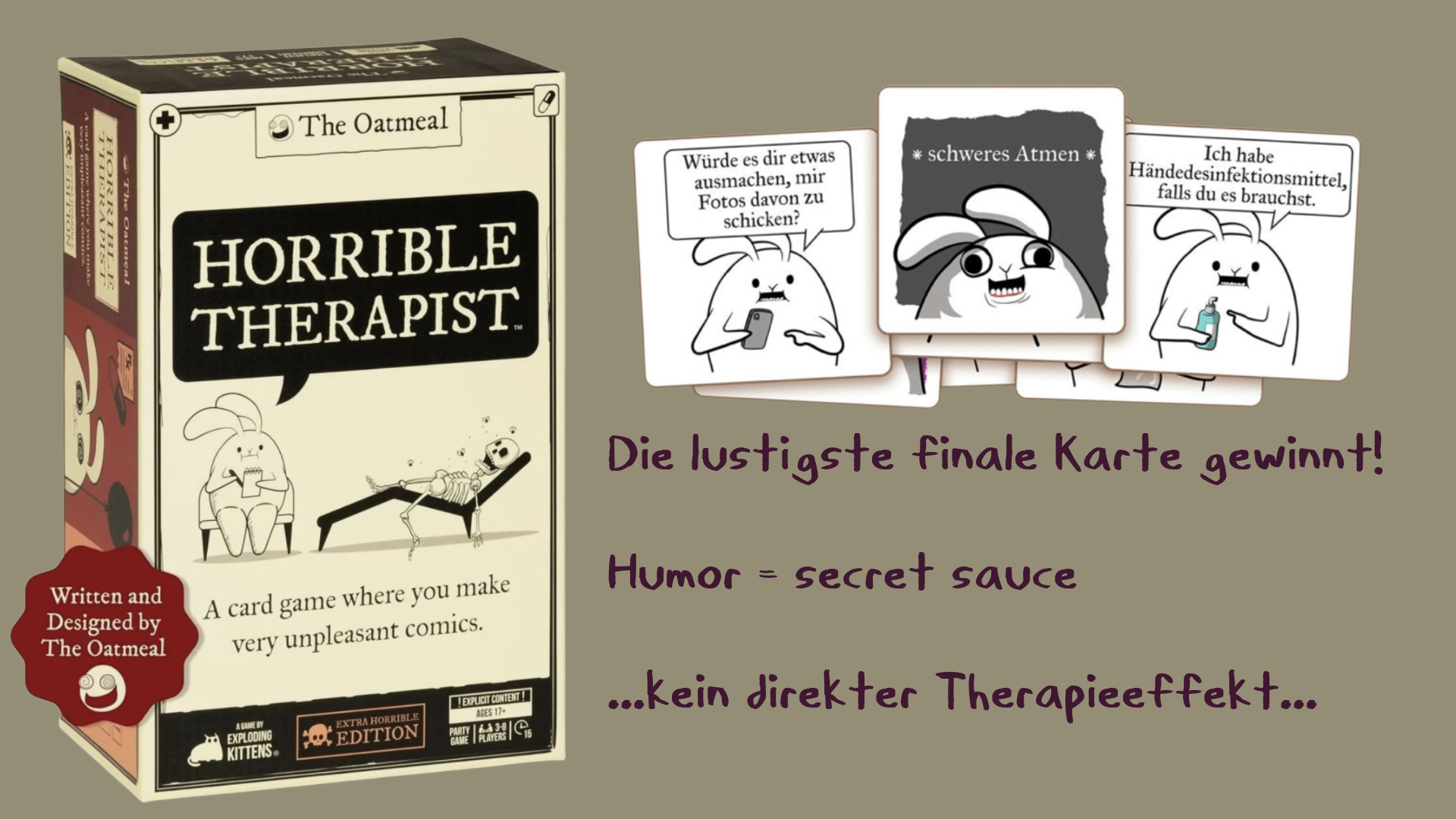
But the invitation of humor, too, is often a welcome counter-swinging movement in therapeutic settings for releasing the tension of existential topics and dilemmas.
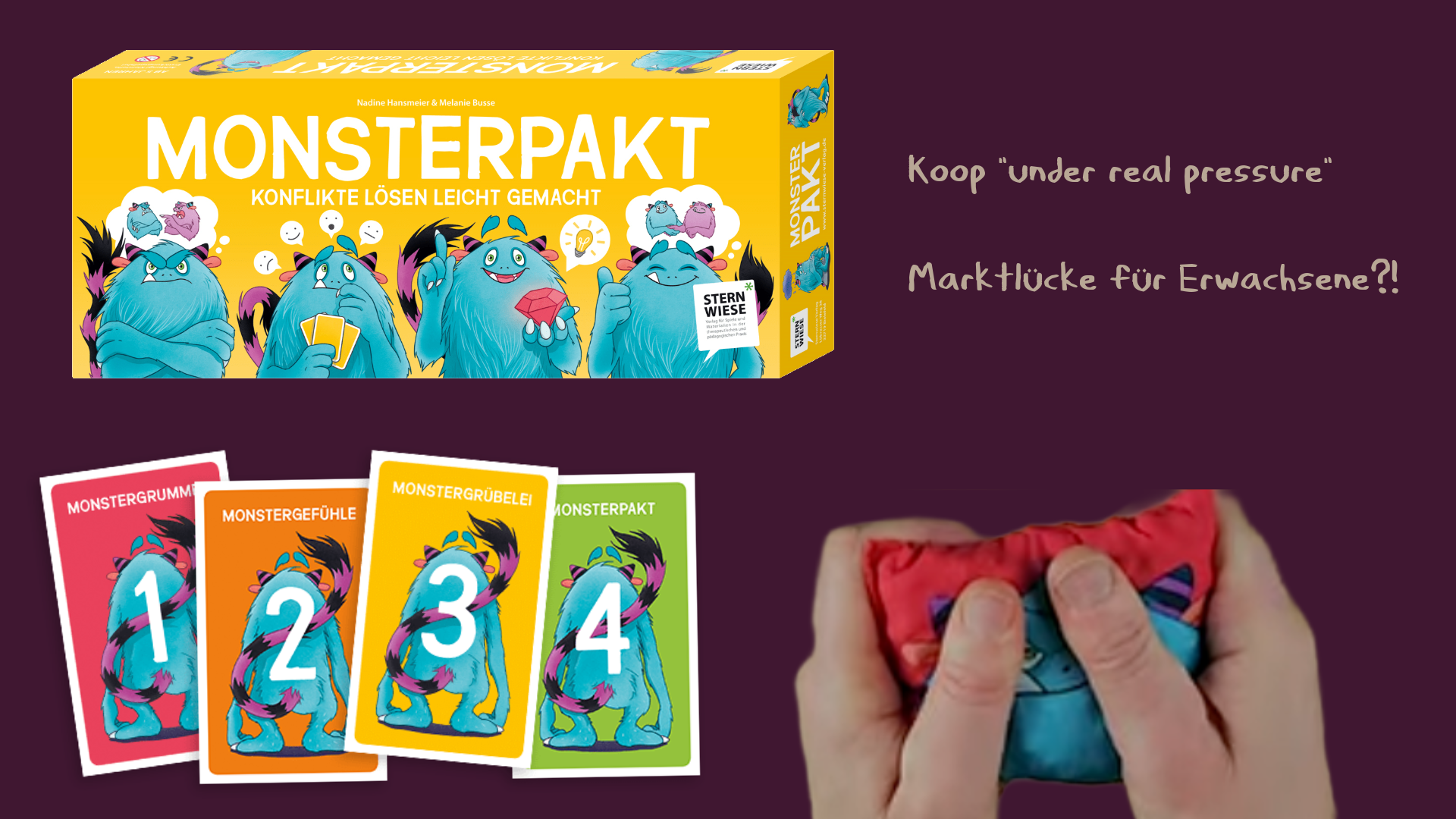
One of the hottest topics is certainly: interpersonal conflicts and relationship care.
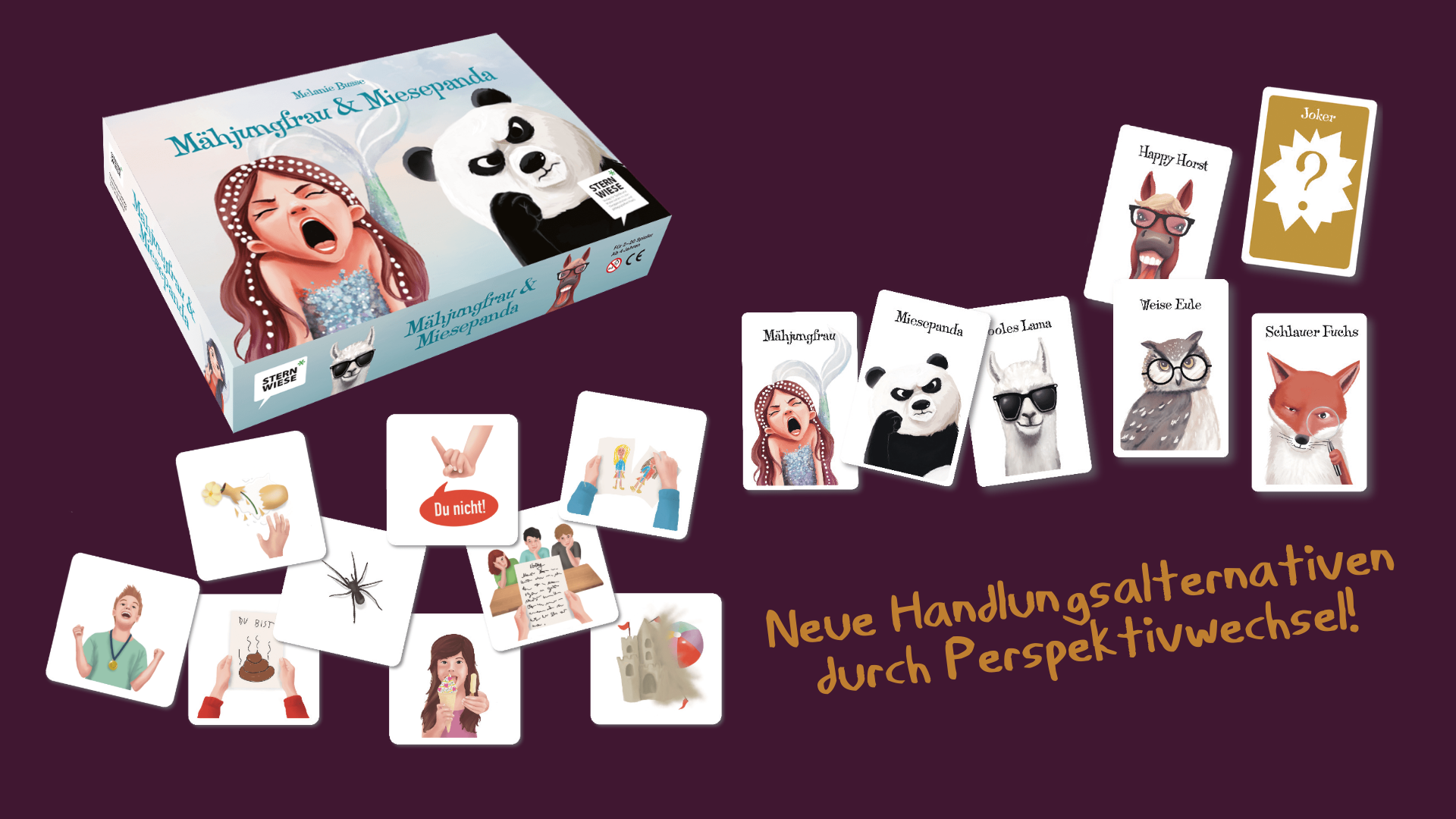
Whereby playing different roles (like the grumpy panda or the clever fox) can considerably expand one's own repertoire of action.
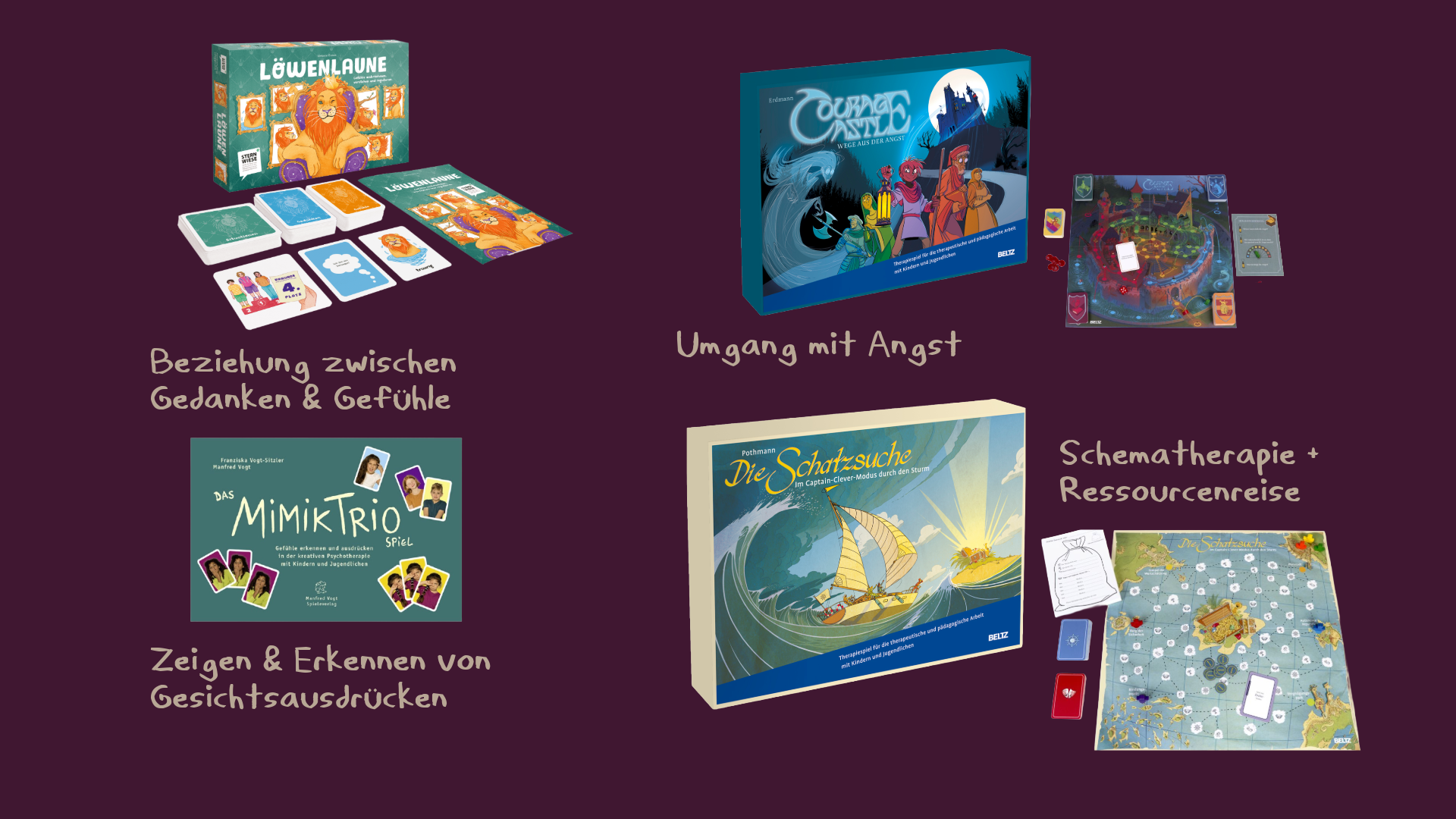
Therapeutic games can thus be used in the sessions AND in the in-between spaces outside.
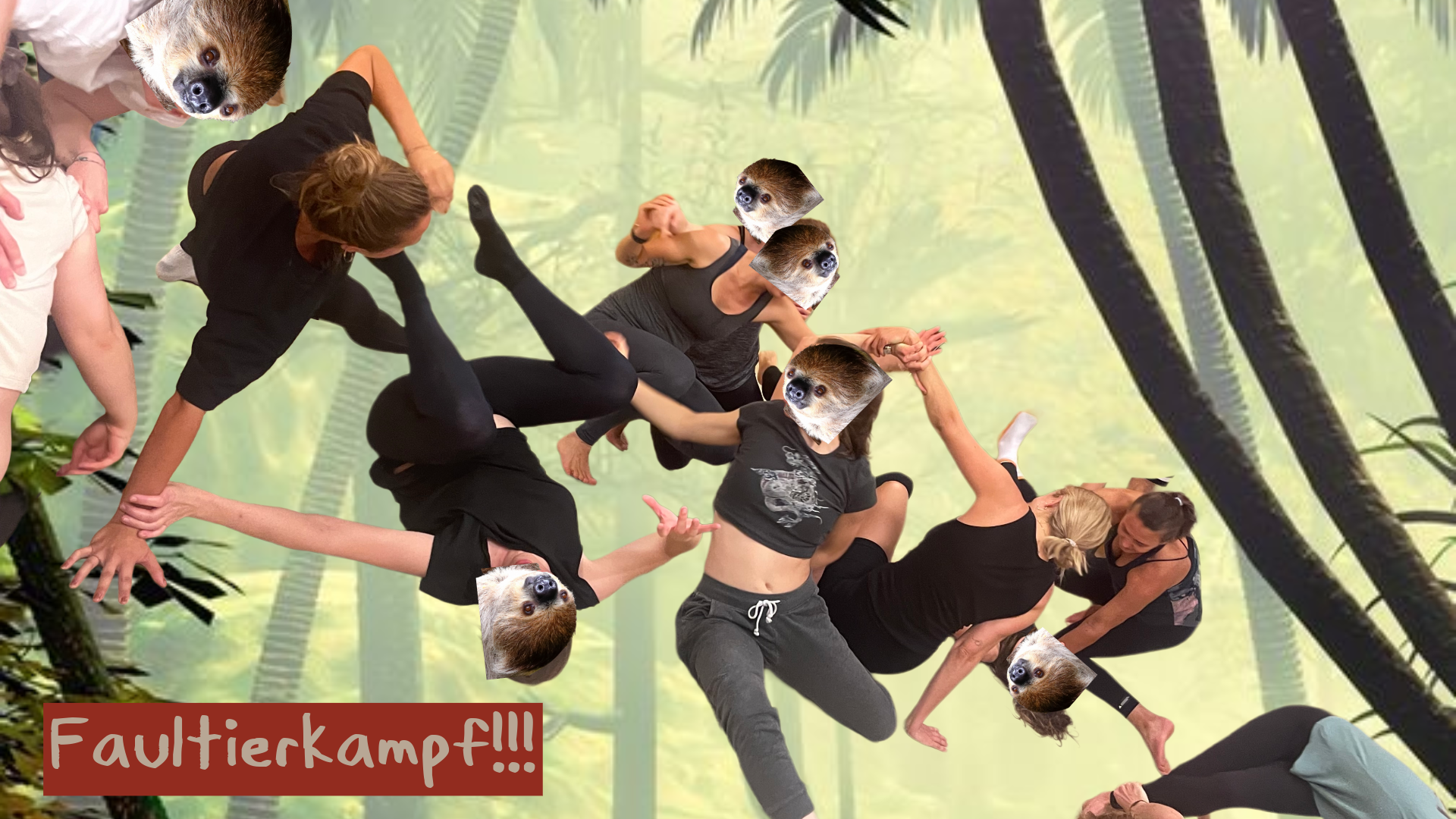
But,
the
body
remains
the
beeest
toy.
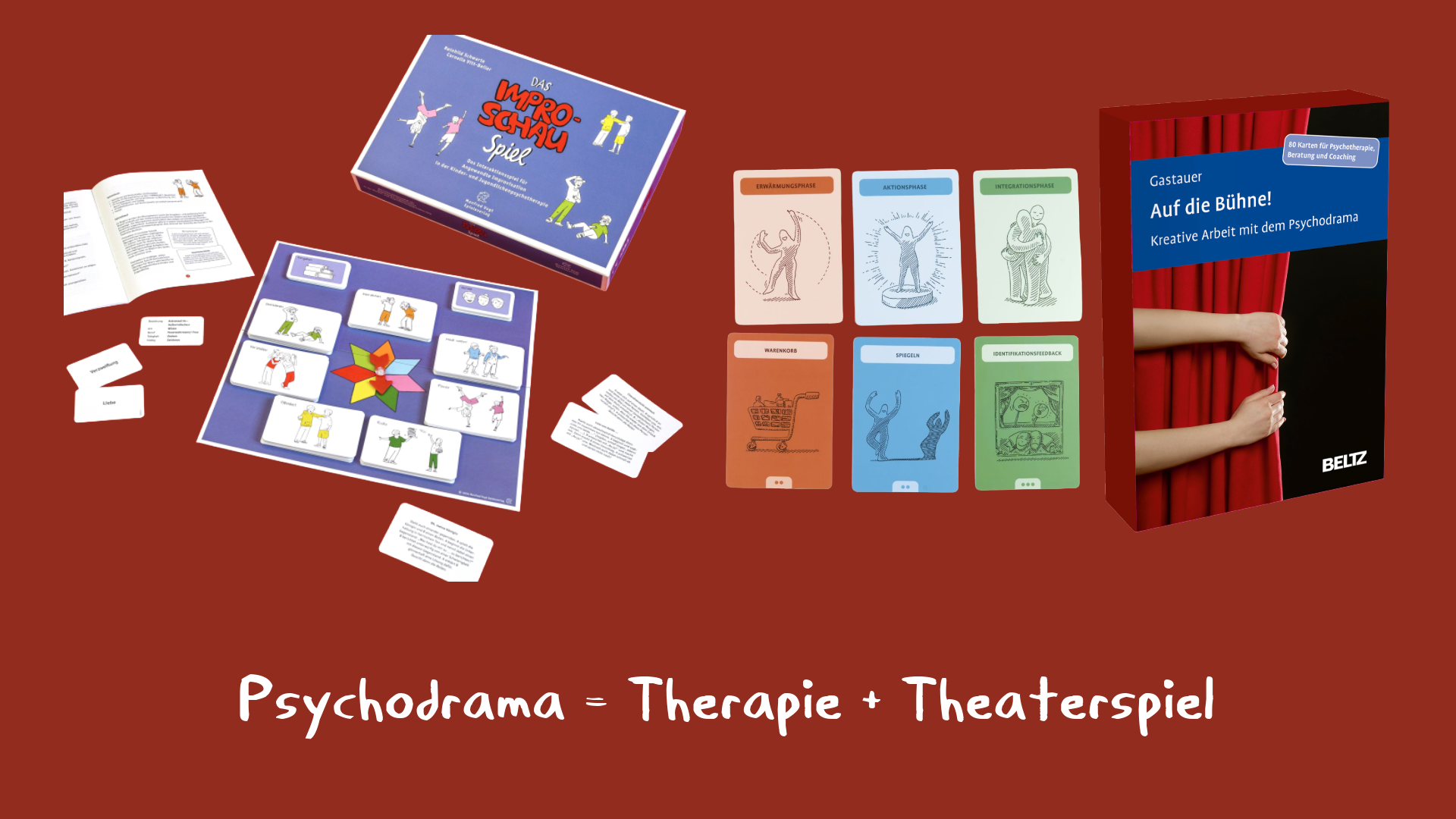
Because the body stores all positive & negative experiences ("the body keeps the score") and often a "hot trail to the essential" even shows itself via the energetic body reactions to certain questions or statements.
Psychodrama is a method that makes emotions and inner conflicts visible through scenic play, so that previously unconscious patterns can be worked on. This access via a bodily-intuitive way is difficult for many in our rational-analytically shaped society.
Yes.
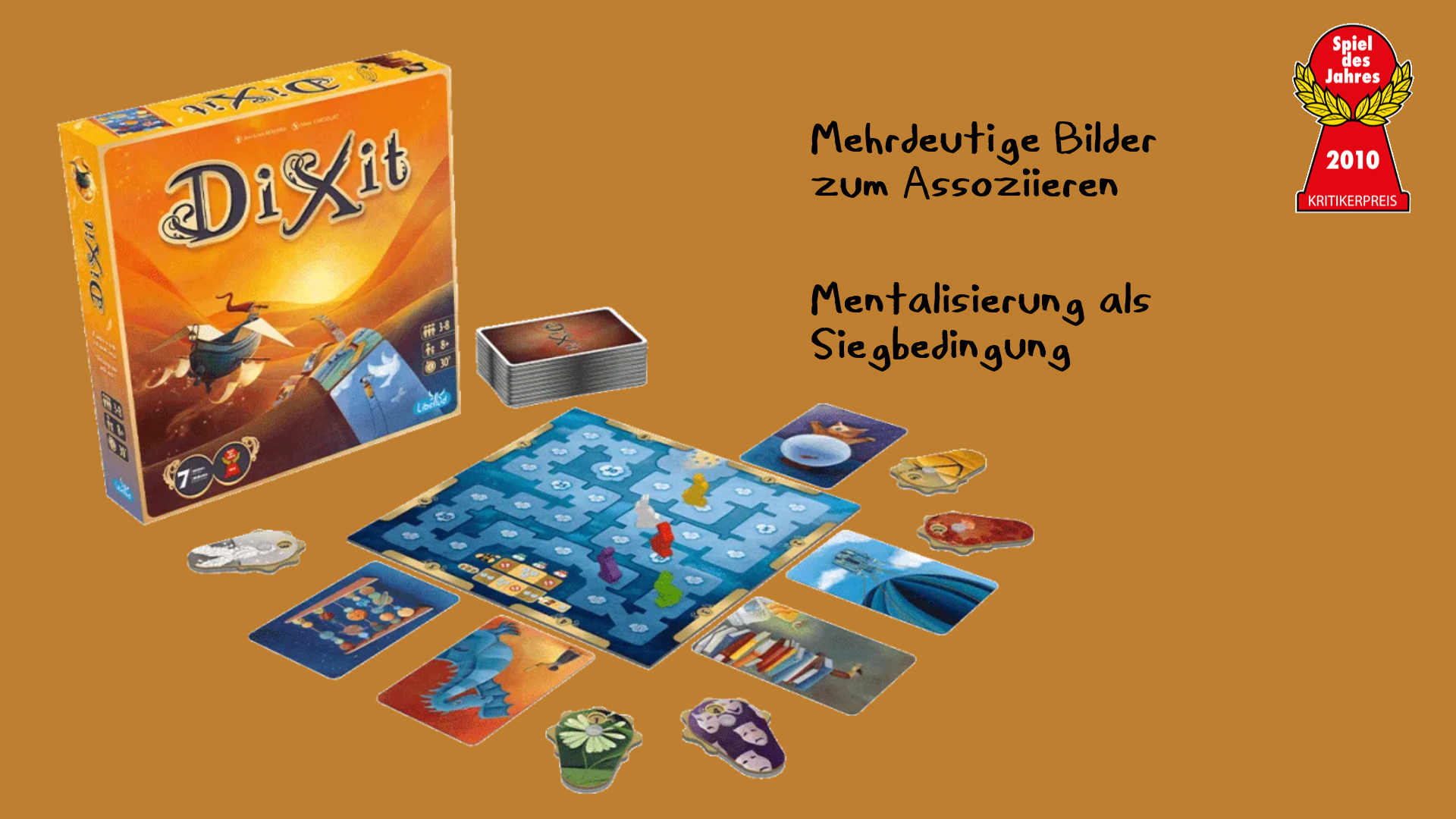
Dixit is probably the most prominent game with a therapeutic flair. The wonderful symbol images are excellently suited for the externalization of inner topics.
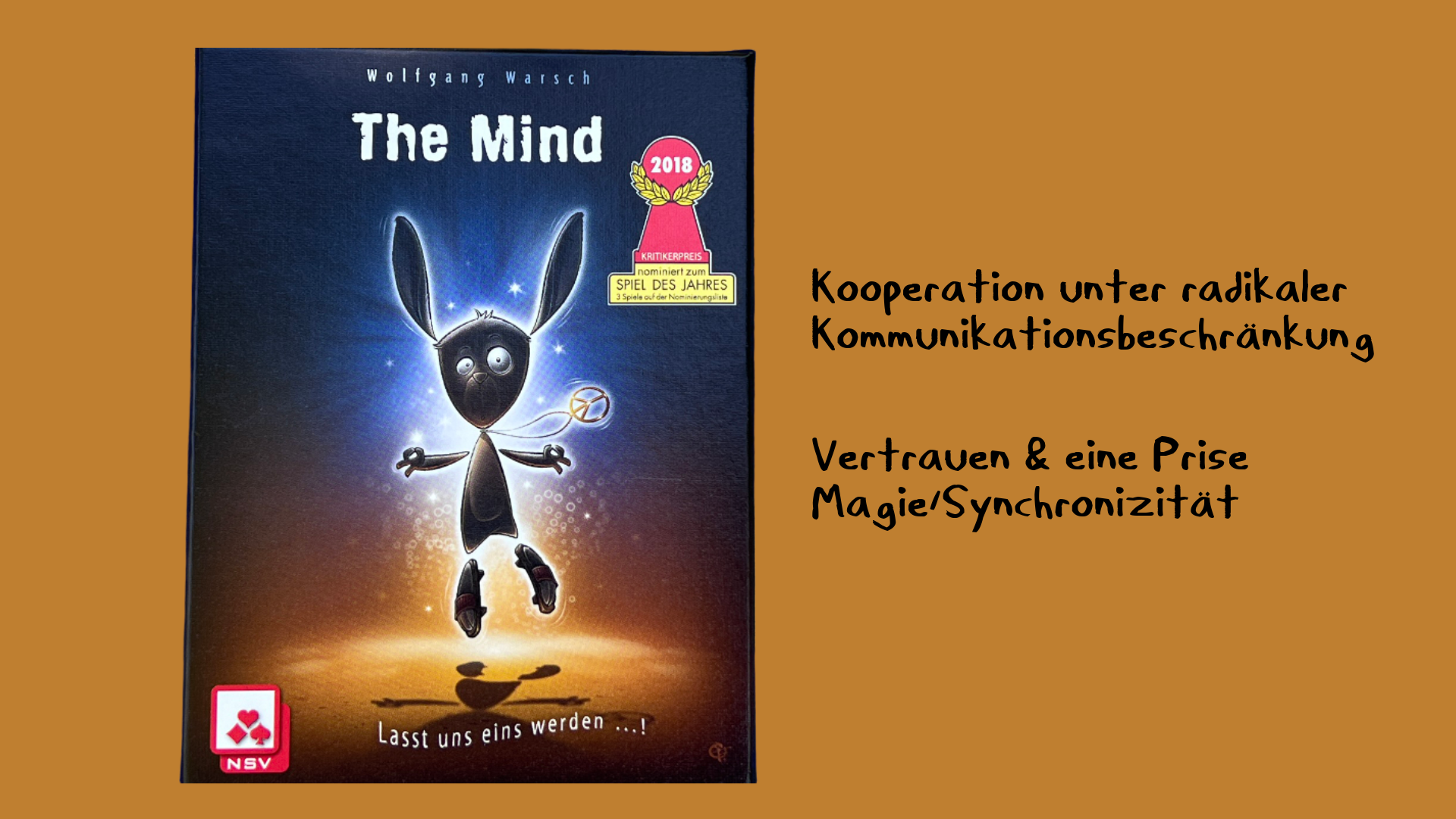
Whereby "The Mind" demonstrates how well synchronization without words works.
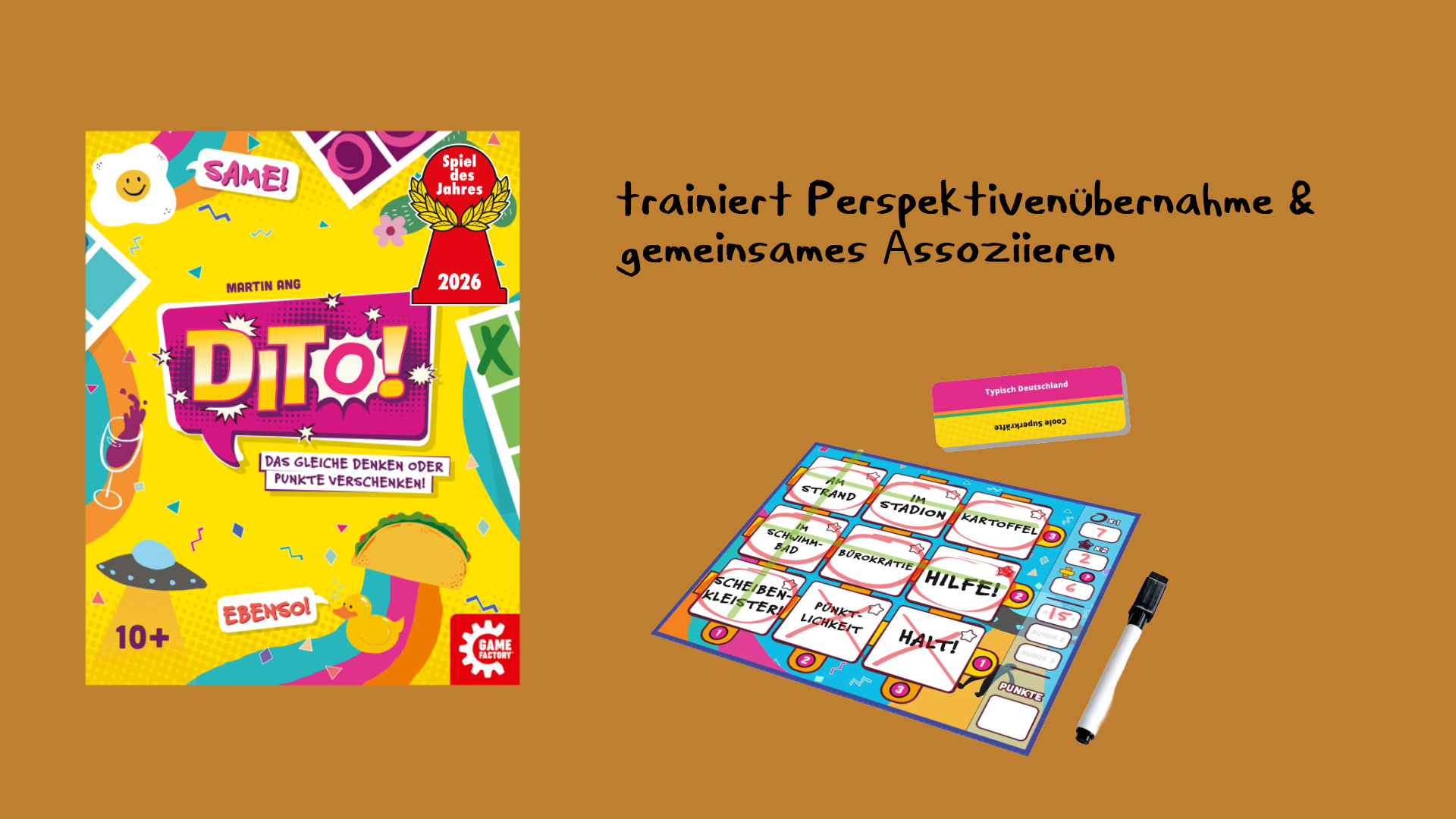
"Dito!" is this year's Spiel des Jahres and extremely good at cultivating perspective-taking, creativity and community spirit.
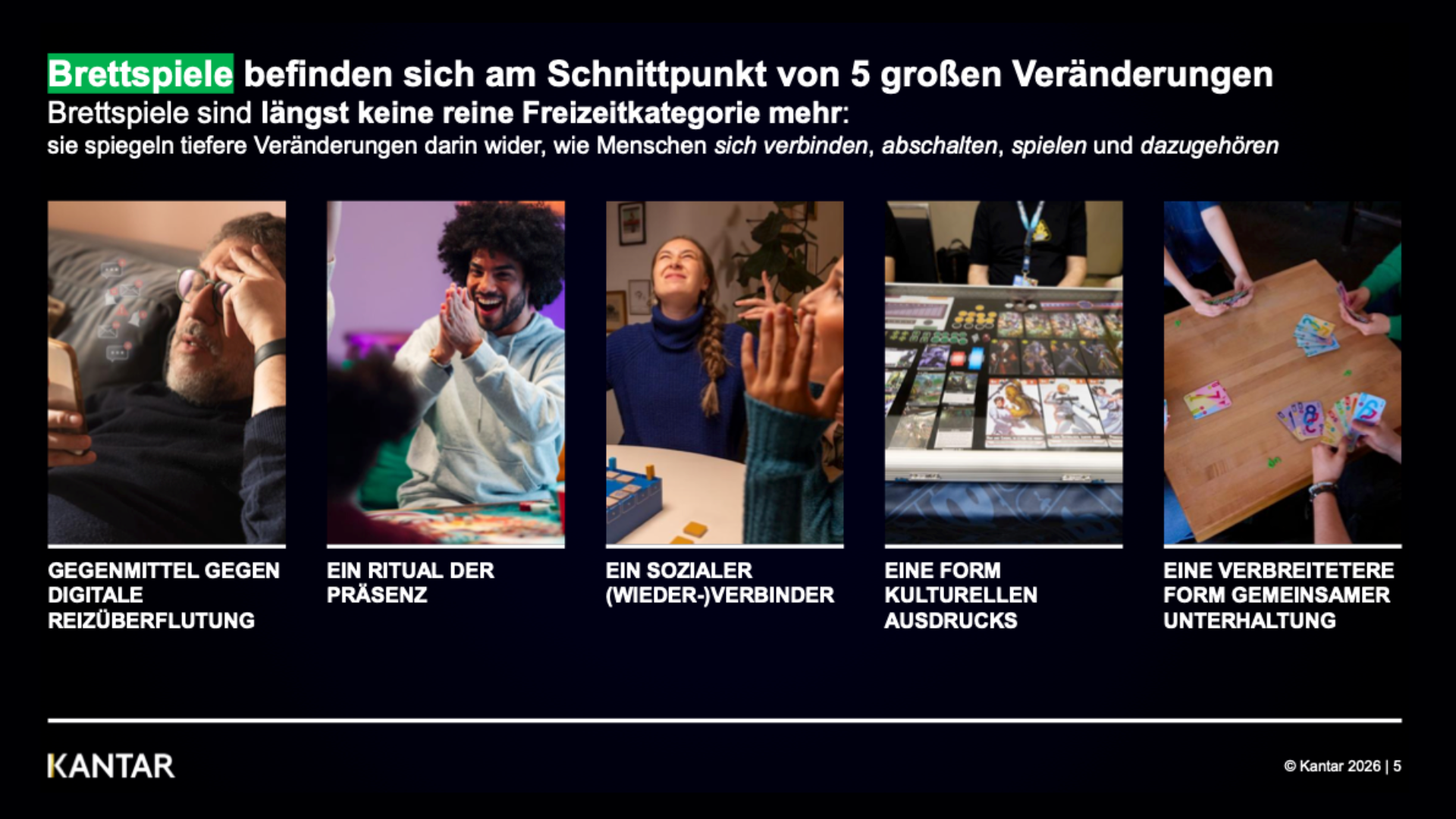
Especially in times when covered therapy is becoming a luxury good, the question arises: "What can still let us cope there?"

Is someone who plays productive, or are they fleeing from reality? Escapism and withdrawal is a possible motive for people to dive into game or fantasy worlds.
But what if games strove in the opposite direction? What if, through playing experiences, we grew more resilient for "the seriousness of life" and for the abilities we need to solve complex dilemmas?
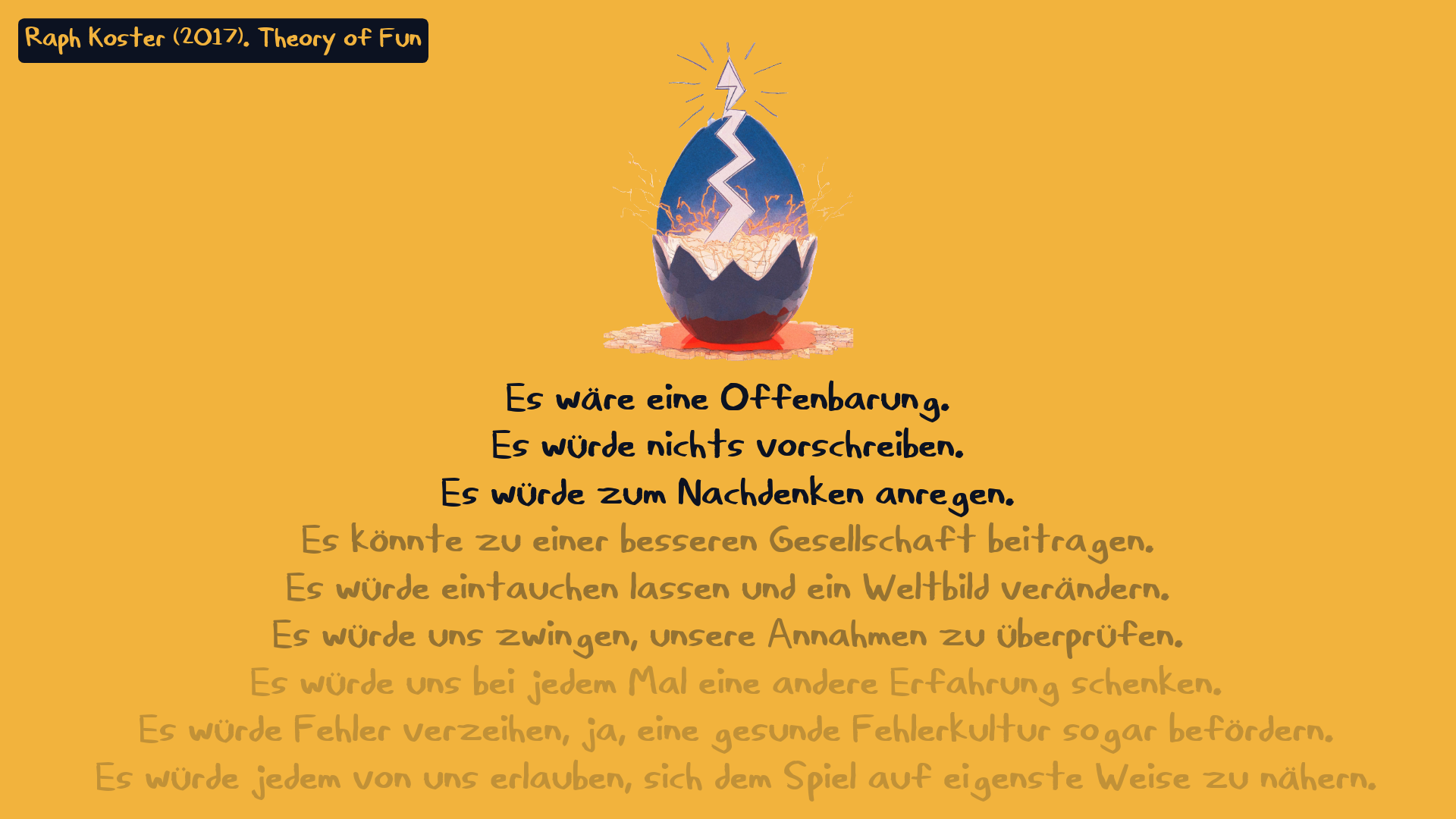
Read these sentences attentively. Which playing experiences come to your mind? Feel free to write us, we are curious: daniel@playtipus.games
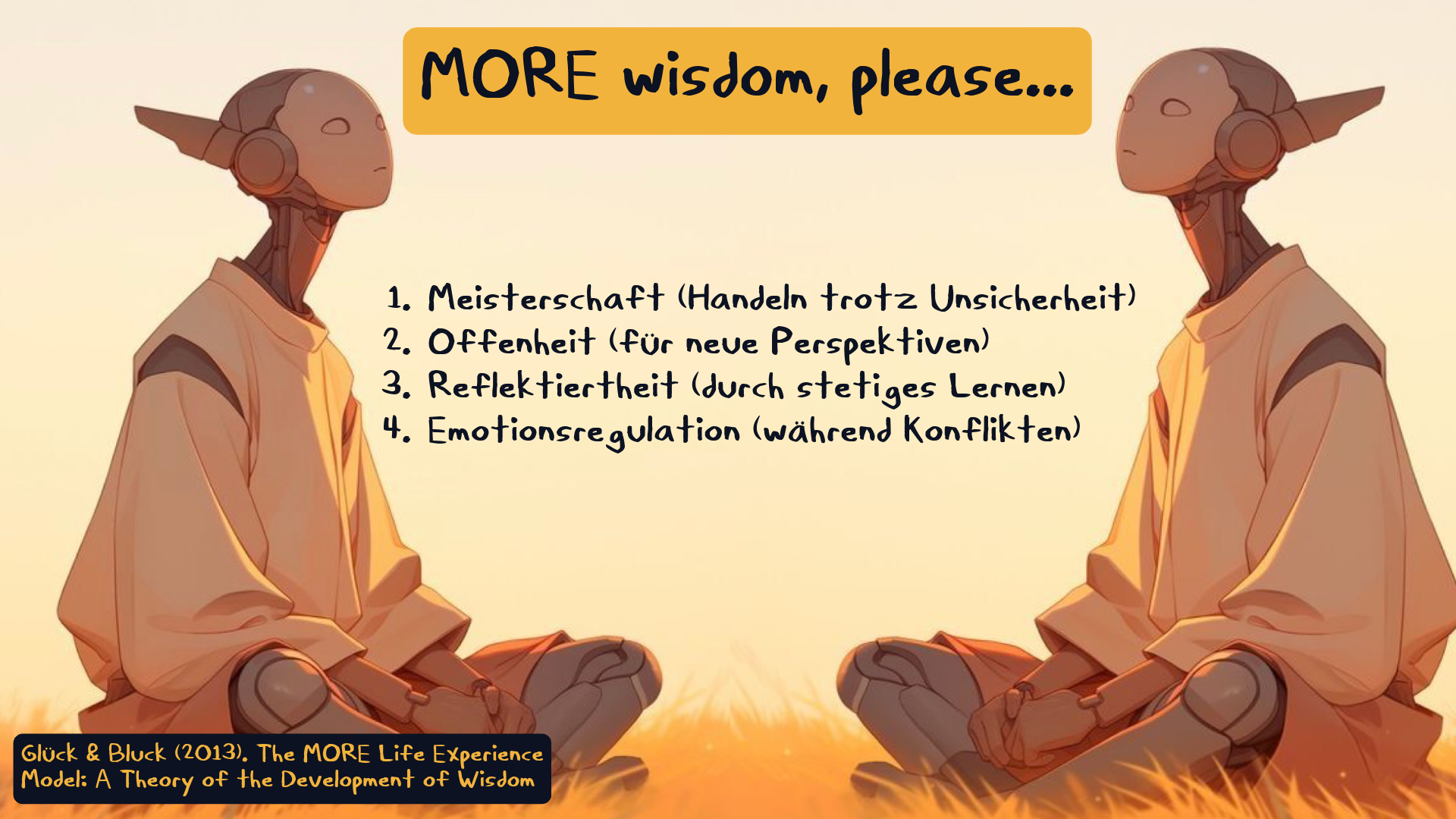
How would it be if we had games that teach us to deal maturely and wisely with the wonders of life? Games that create awareness of needs and their fulfillment and are of use to every feeling being on this planet.
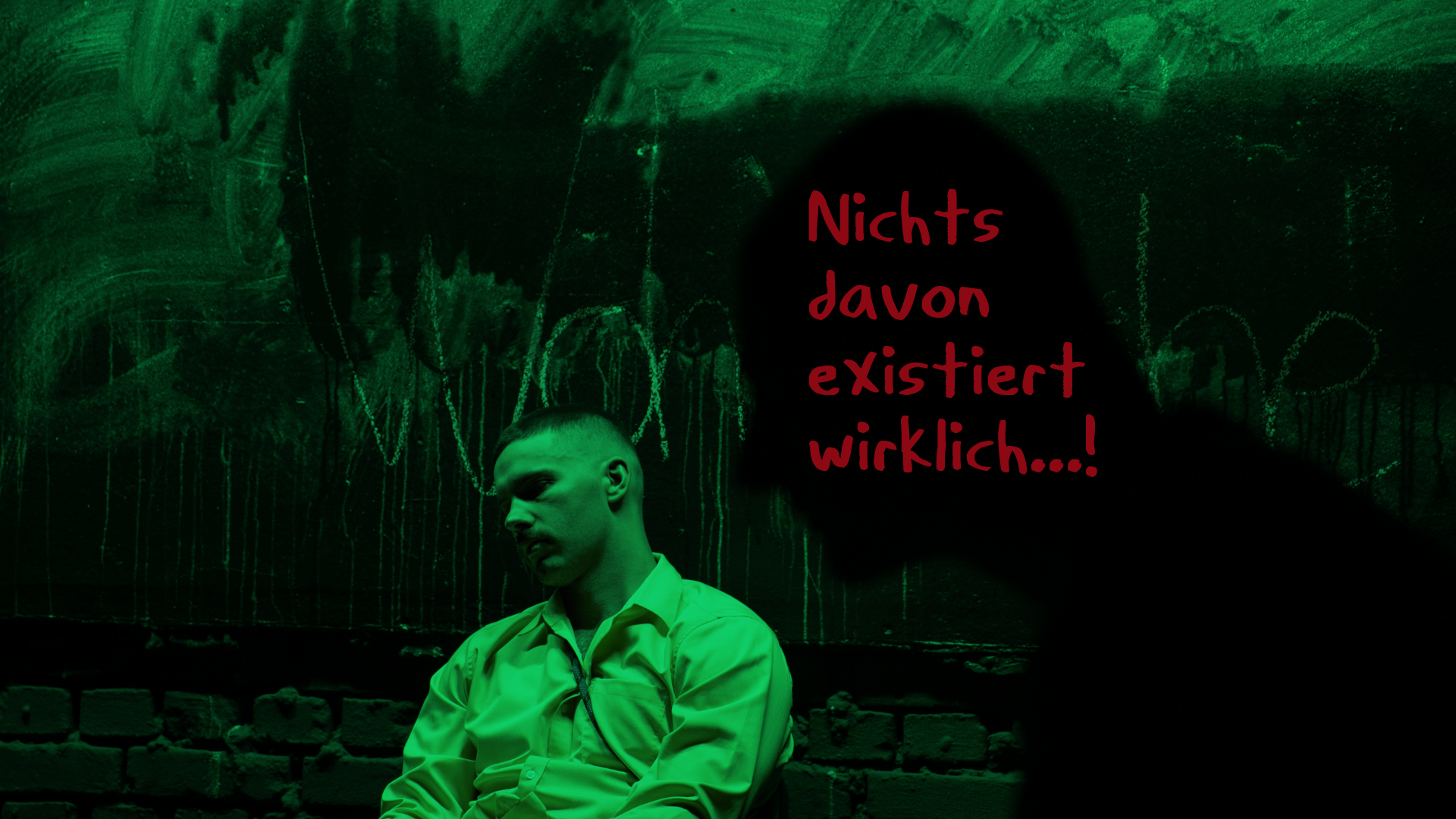
In many places it is still lacking; the metacrisis describes the current state of multiple crises driven by the same generator functions and spiraling each other upward.
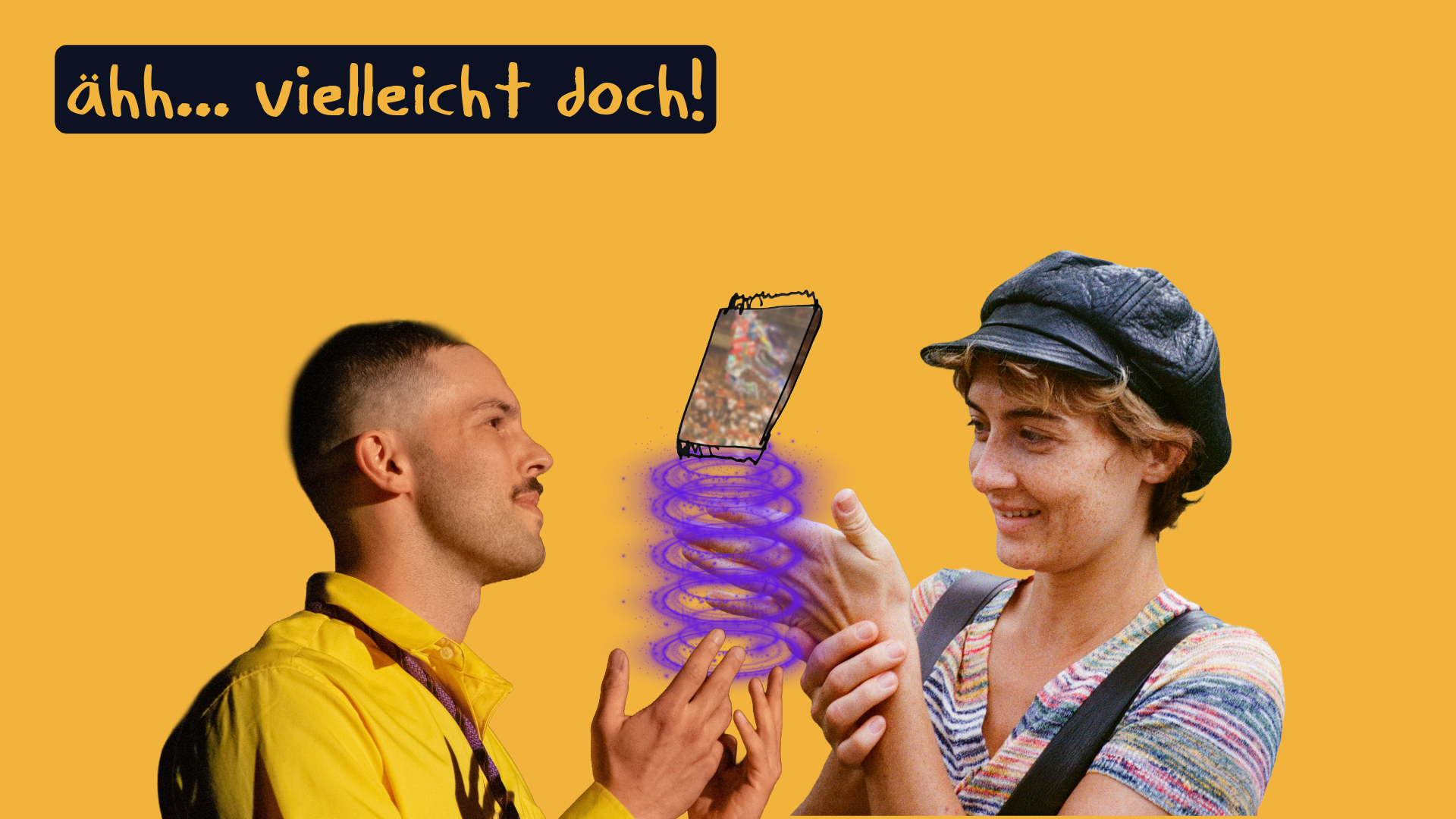
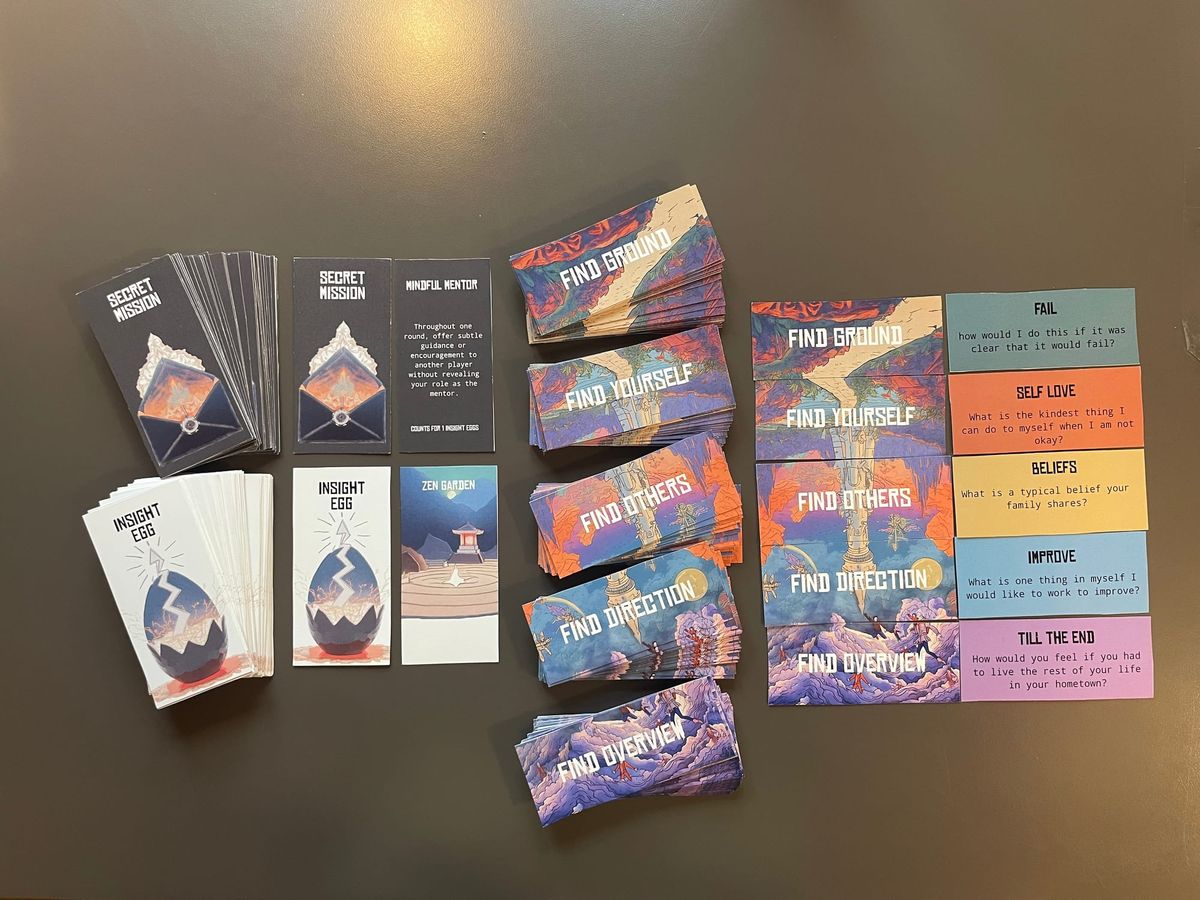
That is why, in our first own game development project, we tried to create a playing experience that helps make conscious life decisions in a world full of contradictions.
In this multi-year process we tested and further developed dozens of prototypes. Quite a few things became clearer to us along the way:
- What do people need so that they can engage with complex, uncertain and emotionally demanding situations?
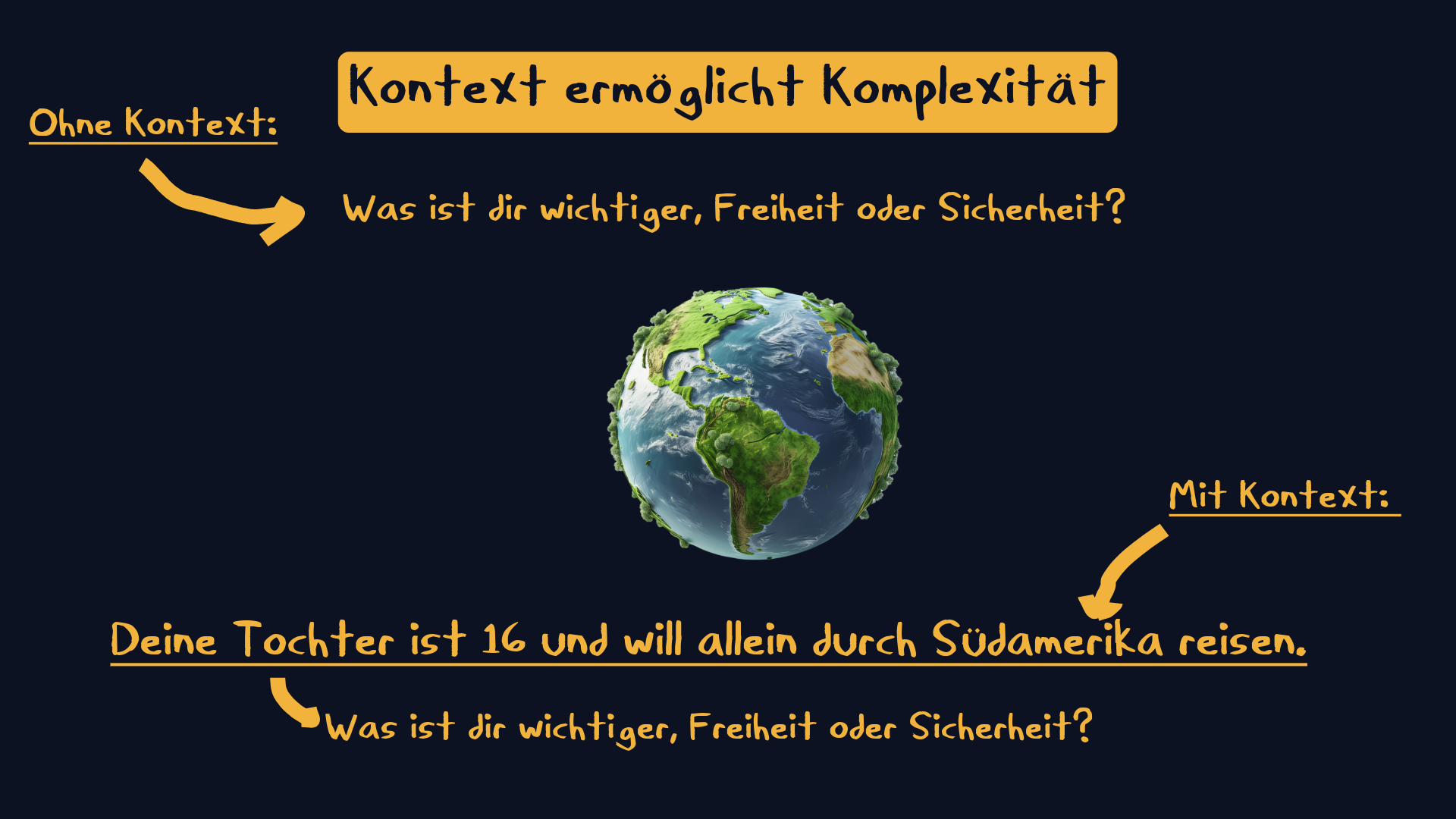
- How must feedback and social interaction be designed so that people feel held, can show themselves and enter growth processes?
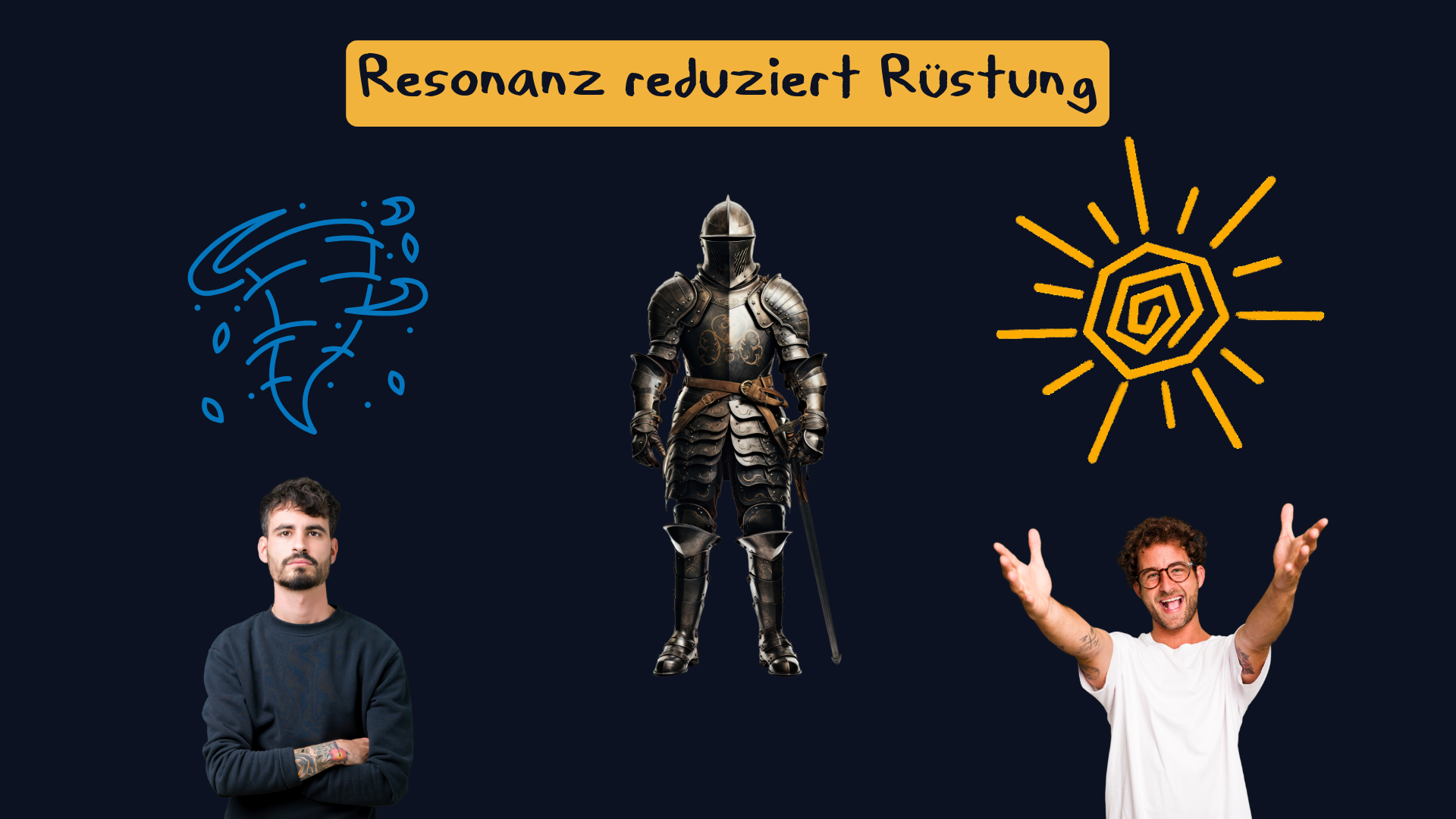
The game should contain no elements that cast doubt on the sincerity of the fellow players; unless coming into contact with one's own doubts is the actual goal.
- Which game mechanics fit as perspective shifts for reflection processes?
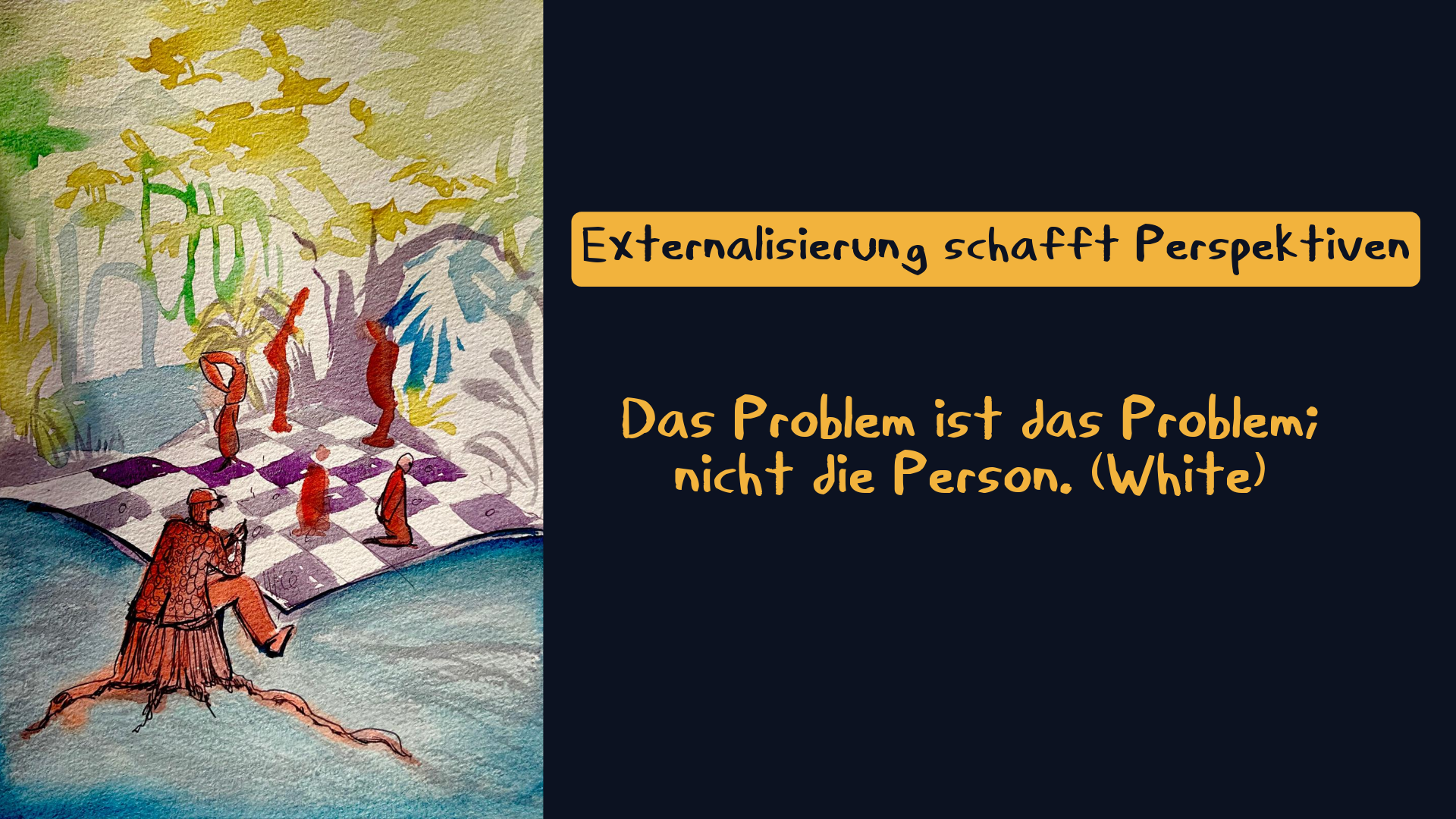
- Which mechanics are suited to processing experiences more deeply and possibly reinterpreting them at a later point?
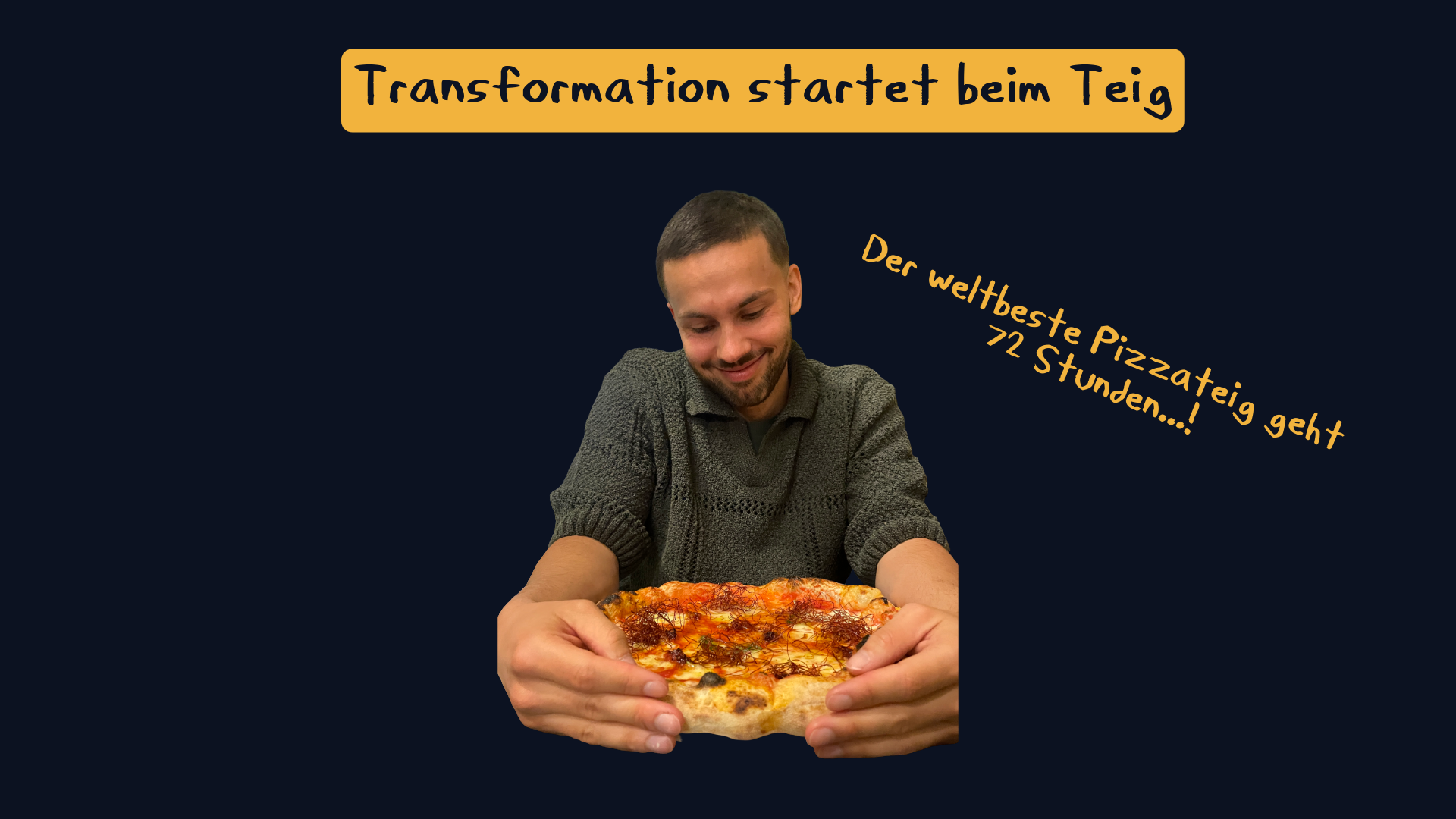
- How does a game create situations in which people link two initially unconnected perspectives with each other?
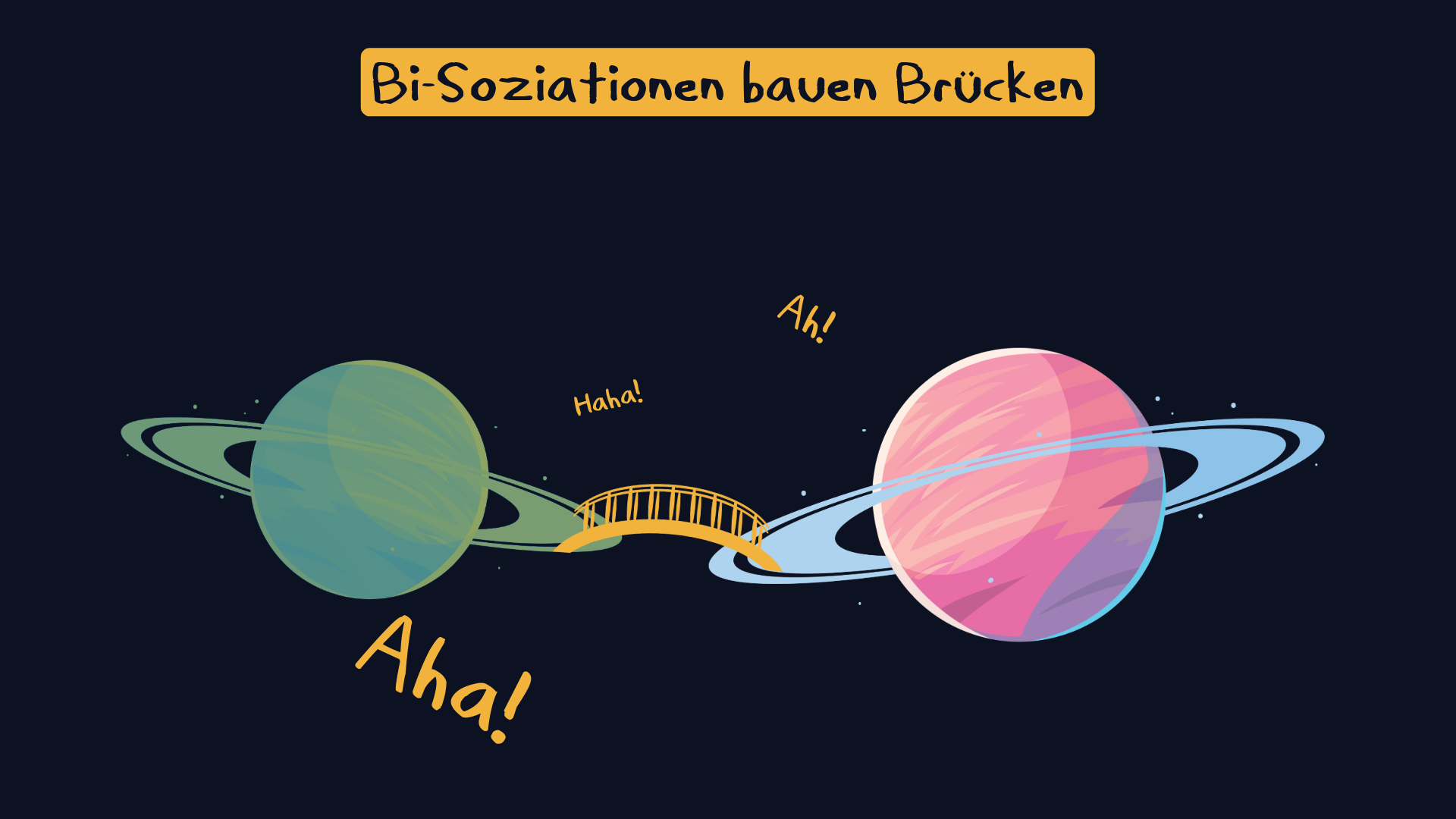
Astonishment, amusement and insight are based on the same principle: bi-sociation. Forming bi-sociations is a creative act. A bi-sociation can be a joke, an unusual pleasure or a flash of inspiration. Bi-sociations are the countermovement to consumption, they are creation.
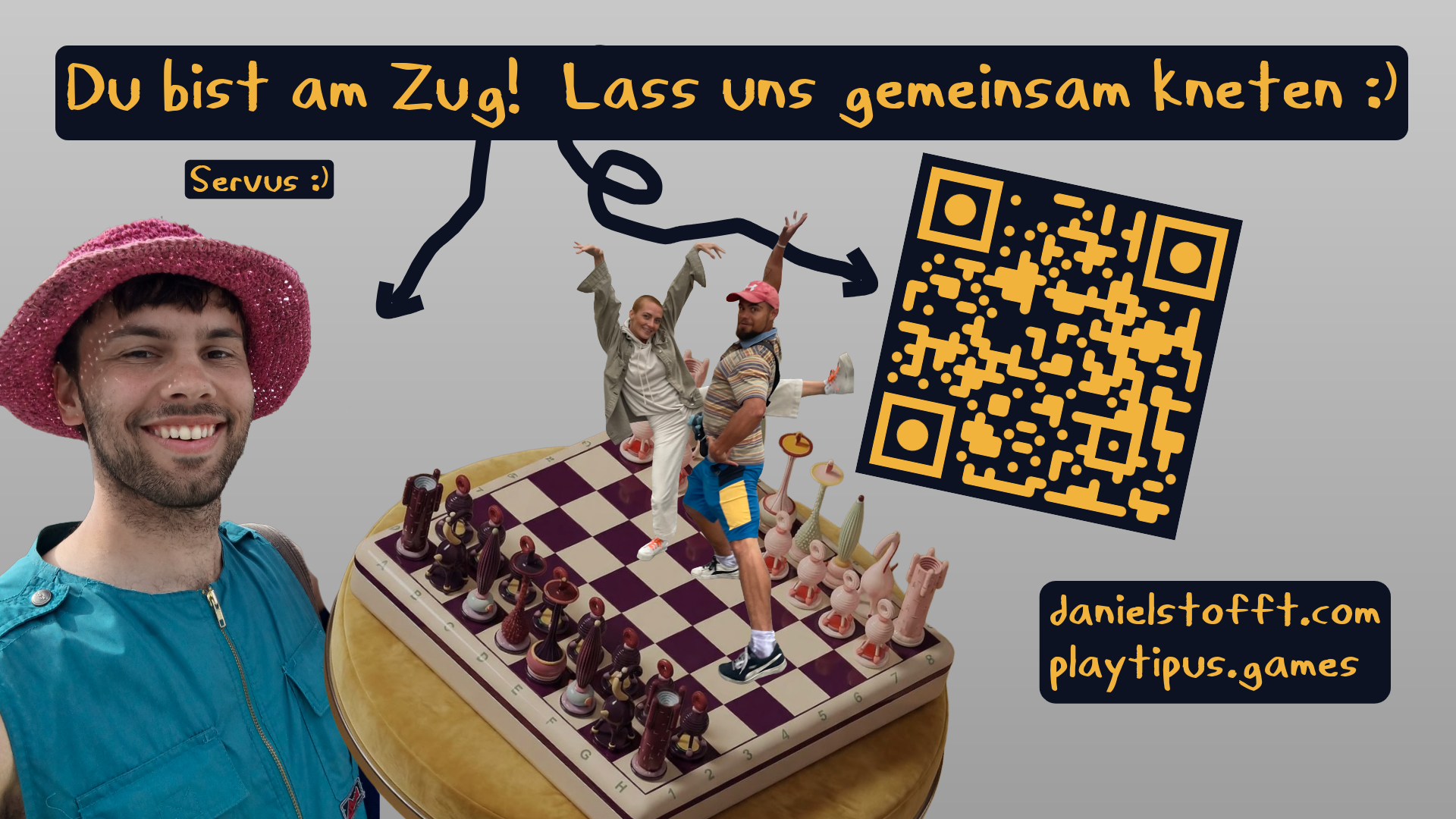
What would a game look like whose prize is insight?
Feel free to read on and be cheered:
 Daniel Geronimo Stofft
 Daniel Geronimo Stofft